

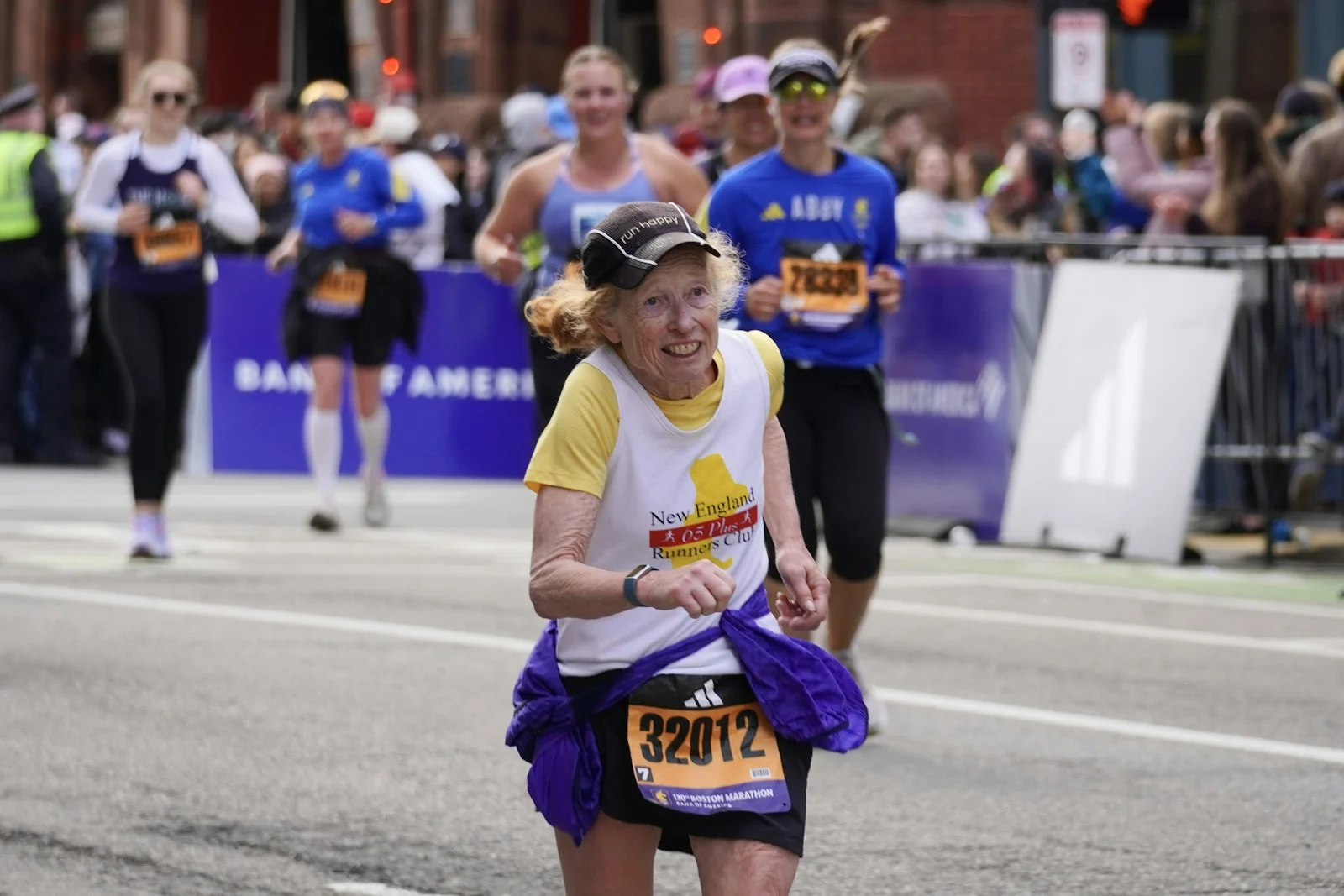
Most people think of exercise as a way to look better or lose weight. Long-term studies suggest the bigger payoff shows up decades later. Stronger and more active people tend to live longer, and they stay able to do everyday things on their own for more of those years.
Two kinds of exercise have been studied the most here: lifting weights and running.
Jump to a section
How I got started
I started strength training for real in 1985, my freshman year of high school. I did it often with my friends so we’d be strong for sports all year long. My sophomore year I built a weight bench out of wood so I could lift at home, and I wish I had a photo of it. Back then the weights were plastic shells filled with sand or cement.
I started doing triathlons around 2003, after a life-changing event in my life. I needed something to fill my time and take my focus off the issue at hand. It fit me perfectly because I loved working out.
What my week looks like
I strength train three times a week. On my off days I do back, shoulder and knee exercises to keep my body in shape for years to come.
Stronger men lived longer
In 2008 the BMJ published a study of 8,762 men aged 20 to 80 from the Aerobics Center Longitudinal Study in Dallas. At the start, each man did a one-rep max on the bench press and the leg press, and the two scores were combined into one strength number. The men were then followed for almost 19 years, and 503 of them died.
The men in the weakest third had the highest death rate. After adjusting for age, activity, smoking, drinking, weight and health problems, the middle and strongest thirds had about a 23 to 28 percent lower risk of dying than the weakest. They also had a lower risk of dying from cancer. That link held even after the researchers accounted for how fit each man’s heart and lungs were on a treadmill test.
What a handshake can tell you
A much bigger study measured strength in a simpler way. The PURE study tested grip strength with a hand-held device in 139,691 adults aged 35 to 70 across 17 countries, rich and poor. Over about four years, every 5 kilograms of lost grip strength went with a 16 percent higher risk of dying from any cause and a 17 percent higher risk of dying from heart disease. Grip strength predicted death better than systolic blood pressure did. The study was published in The Lancet in 2015.
The authors were careful to say this doesn’t prove that getting stronger will lower your risk. Grip strength may partly be a sign of overall health. Still, it’s hard to find a study where weaker does better.
How much lifting is enough
A 2022 review in the British Journal of Sports Medicine pooled 16 studies on muscle-strengthening exercise. People who did it had a 10 to 17 percent lower risk of dying early, and less heart disease, cancer, diabetes and lung cancer. The biggest benefit showed up at about 30 to 60 minutes a week. Past that, the curve flattened out and the extra benefit wasn’t clear. People who did both strength and aerobic exercise did better than people who did neither.
That lines up with the federal Physical Activity Guidelines, which ask adults to do muscle-strengthening work at least two days a week. Two 20- or 30-minute sessions get you there. You don’t need a gym. An adjustable bench and a pair of adjustable dumbbells cover most of the major muscle groups, and the weight bench exercises page walks through the moves. If you like the bench press, the bench press workout lays out a routine.
Older runners stayed independent longer
Running was once thought to wear out older bodies. A Stanford study that started in 1984 tested that. It followed 538 members of a running club and 423 people who didn’t run, all 50 or older, for 21 years. Every year they filled out a questionnaire on how hard everyday tasks were, like dressing, walking, getting out of a chair and reaching.
Both groups found those tasks harder as they aged, but the runners declined much more slowly. By one measure, the runners took about 12 years longer than the non-runners to reach the same mild level of disability. At 19 years, 15 percent of the runners had died, compared with 34 percent of the non-runners. After adjusting for differences between the groups, the runners still had about a 39 percent lower risk of dying. The gap between them kept growing as the participants reached their 80s. The study was published in the Archives of Internal Medicine in 2008.
You don’t have to run far
A larger study from the same Dallas clinic looked at 55,137 adults over 15 years. Runners had a 30 percent lower risk of dying from any cause and a 45 percent lower risk of dying from heart disease than non-runners, which worked out to about three extra years of life. The benefit was about the same whether people ran a little or a lot. Running less than 51 minutes a week, slower than 6 miles an hour, was enough to see it. The people who kept running over the years did best. That study was published in the Journal of the American College of Cardiology in 2014.
For someone who doesn’t run now, that’s good news. Five to 10 minutes a day at an easy pace is a realistic place to start.
How I’d start
For anyone starting to work out, I’d suggest a simple Monday, Wednesday and Friday strength routine. Start with 5 sets of 5 reps, which is a good middle ground for gaining strength. Do your normal bench press, bicep curls, triceps exercises and an ab circuit. I’d do bodyweight lunges and squats until you can get with someone who can teach you the correct form for weighted squats.
If you haven’t worked out in a long time and you’re older, start by walking and doing bodyweight exercises. Check with your doctor if you have any health concerns, but keep it simple. I’d also suggest scheduling time with a personal trainer if that’s in your budget.
Sticking with it
People say it takes 21 days to build a habit. What they’re really saying is that being consistent will eventually make working out a habit. You have to make a commitment to yourself that this is good for you and stick with it. There will be days you don’t want to, and you do it anyway. You’re always glad you went once you get there and finish the workout.
The research backs up the consistency part. A 2012 review in the British Journal of General Practice says the 21-day idea seems to come from anecdotes about plastic surgery patients getting used to their new appearance. In a study it cites, a new daily behavior took an average of 66 days to become automatic, with a lot of variation from person to person, and missing an occasional day didn’t derail it.
Putting it together
The research points to doing both. Lift something heavy a couple of times a week and do some kind of cardio most days. For cardio, running, a spin bike, a rowing machine and brisk walking all count. If you’re over 50 or just getting started, the easy exercises for seniors are a safe first step before you add weight or speed. Go slowly with running if you haven’t done it in years, and buy decent shoes.
What the research can’t tell you
All of these studies are observational. People who choose to lift or run may be healthier in other ways, and the researchers could only adjust for what they measured. The Stanford runners were younger, leaner and less likely to smoke at the start. The Dallas strength study only included men, mostly white and well educated. None of these studies tested whether starting to lift or run later in life gives the same benefit as doing it for decades.
If you have heart disease, joint problems or haven’t exercised in a long time, check with your doctor first.
Where to get help
If you’re older, out of practice, or dealing with a health condition or an old injury, a short session with the right professional can save you months of guessing. Your own doctor should be the first call if you have heart disease, joint problems or chest pain with exertion. For pain that doesn’t settle, a physical therapist can find the cause and build a plan around it. A certified trainer can teach lifting form, especially for weighted squats.
- ChoosePT from the American Physical Therapy Association, with a tool to find a physical therapist near you.
- American College of Sports Medicine: verify a certified professional, to check a trainer or exercise professional’s credentials.
- National Strength and Conditioning Association: find a certified professional, for trainers certified in strength coaching.
- Physical Activity Guidelines for Americans, the federal recommendations for how much to do at every age.
Where this page came from
Fitness Rocks started as a podcast by the doctor I bought the site from. In 2008 he covered muscular strength and the risk of dying, and running and age-related disability, soon after both of these studies came out. Those episodes are gone, so this page covers the same research along with the bigger studies that followed.


Leave a Reply